Solution
Cloud Acceleration
& Optimization
Move to the cloud faster and spend less once you get there. Understand what data you actually need before you migrate, so you don’t pay to store years of redundant, obsolete and inactive content in a more expensive place.
Request a Demo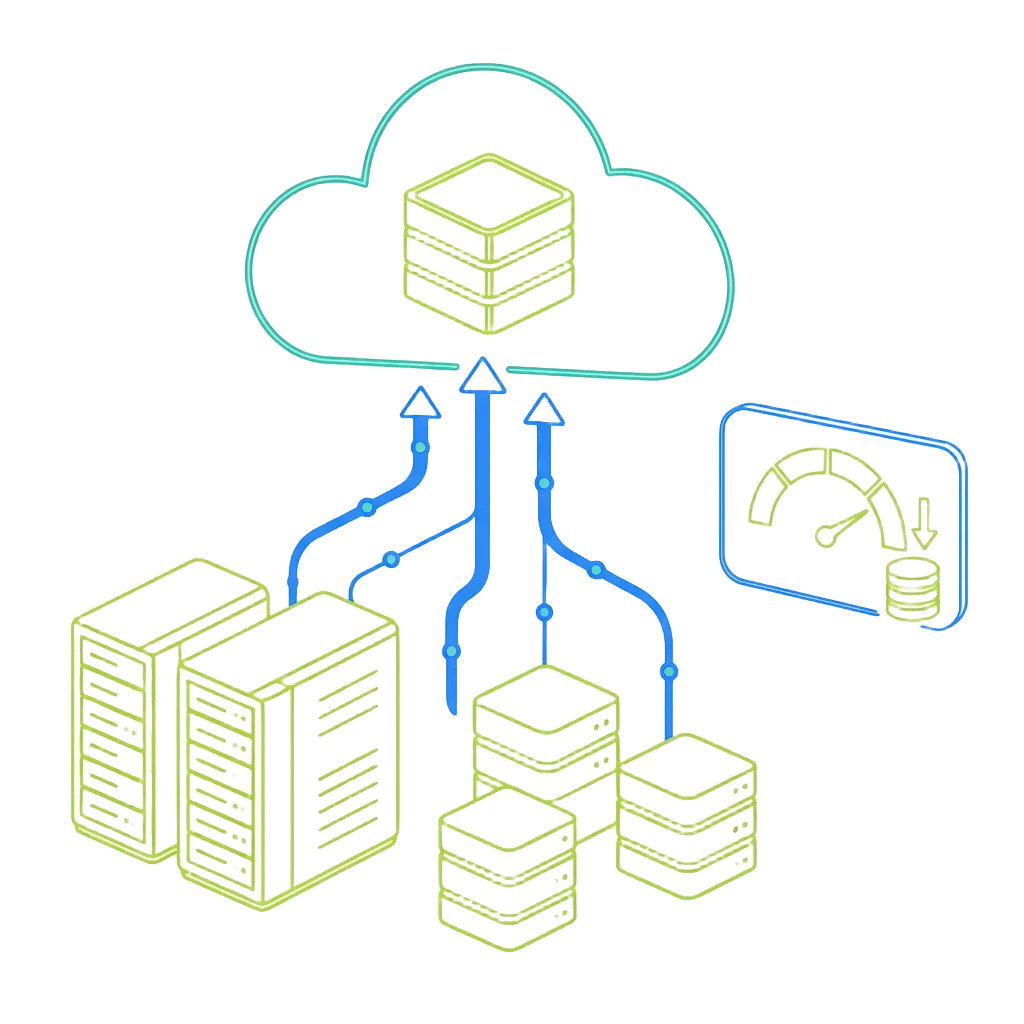
Cloud migrations don’t solve data problems,
they just move them
Organizations often begin cloud migrations without a clear understanding of the data they’re moving. The result is unnecessary migration effort, higher cloud consumption, continued data sprawl, and sensitive or regulated information ending up where it shouldn’t.
Migrating Everything, Including the Junk
Lift-and-shift moves redundant, obsolete and trivial data into the cloud, where you pay to store it again – every month, forever.
Slow, Unpredictable Migrations
Moving an unknown data estate creates longer timelines, greater resource requirements, and unnecessary operational complexity.
Cloud Spend That Keeps Climbing
Inactive data sits in premium tiers, egress and API charges accumulate, and no one can tie storage cost back to business value.
Risk Moves With the Data
Sensitive and regulated information can be moved without the appropriate controls, increasing security and compliance exposure.
Before you migrate, replatform, or expand your cloud footprint, understand what you’re actually moving.
Don’t lift and shift your data problems –
migrate less, move faster
Gain visibility into the data behind your cloud initiative so you can determine what to move, what to leave behind, what to eliminate, and what requires additional protection.
Step 01
Discover
Before you migrate, gain visibility across on-premises, cloud, file shares, NAS, object storage, and hybrid environments.
Step 02
Understand
Analyze data by age, activity, ownership, type, sensitivity and business value and other characteristics to inform migration decisions.
Step 03
Optimize
Identify ROT, stale, duplicate, inactive, and low-value data that doesn’t need to consume migration resources or cloud capacity.
Step 04
Migrate & Govern
Migrate with confidence, then apply continuous policies that keep cloud spend and risk under control.
Congruity360 turns unnecessary data movement
into smarter, more efficient migrations.
Migration and cloud infrastructure tools are designed to transfer, store, and manage data. Congruity360 provides the intelligence needed to make better decisions about the data before, during, and after migration.
Your
Data Estate
On-Premises
Data centers, NAS
File Shares
Windows, SMB, NFS
Object Storage
S3, Blob, etc.
Existing Cloud
AWS, Azure, Google Cloud
Discover
Inventory everything in migration scope
Understand
Analyze value, age, activity and sensitivity
Act
Apply policies and migrate at scale
Delete
ROT data before it migrates
Archive
Inactive data to low-cost tiers
Migrate
Only what the business needs
Protect
Sensitive & regulated content
A leaner, cloud-ready data estate.
Lower Cloud Spend
Faster Migrations
Right-Sized Tiers
Reduced Migration Risk
Get more value from your cloud investment
Cloud optimization is not a migration project – it is an ongoing reduction in cost, risk and complexity.
Accelerate
Migration Timelines
Reduce the volume and complexity of data that needs to move, helping teams complete migration initiatives faster.
Reduce
Migration Costs
Avoid spending resources transferring, processing, and migrating data that no longer provides business value.
Lower
Ongoing Cloud Costs
Reduce the amount of unnecessary data consuming cloud storage, backup, replication, and other services after migration.
Minimize
Security & Compliance Risk
Identify sensitive, regulated, and high-risk information before it moves so appropriate controls and policies can be applied.
Improve
Cloud Architecture
Understand how data is actually being used so it can be placed in the appropriate cloud service, storage class, or environment.
Prevent
Cloud Sprawl
Apply ongoing governance and lifecycle policies to prevent unnecessary data from accumulating again after migration.
Ready to Accelerate Your
Cloud Journey?
Start with a data assessment and see exactly what should – and shouldn’t – move to the cloud.